Are you sure your Poodle is eating what they truly need?
Many Poodle owners believe that giving “a good kibble” is enough, but proper nutrition goes far beyond the product you pick up at the supermarket. Adapting your Poodle’s diet to their life stage, size and daily activity has a direct impact on their health, energy levels and even behaviour.
What should a Poodle eat according to their age?
Poodles, whether Toy, Miniature or Standard, have different nutritional needs at each stage of development. Choosing the right diet is key to their growth, maintenance and overall wellbeing.
Puppies (up to 12 months)
They require a high intake of protein and healthy fats to support their rapid development. Ideally, offer a kibble formulated specifically for puppies, made with easily digestible ingredients and rich in essential nutrients.
Adultos (1 a 7 años)
En esta etapa requieren una dieta equilibrada con proteínas magras como pollo, salmón o cordero, junto a carbohidratos complejos como arroz o patata. Esto les proporciona energía estable y ayuda a mantener una musculatura saludable.
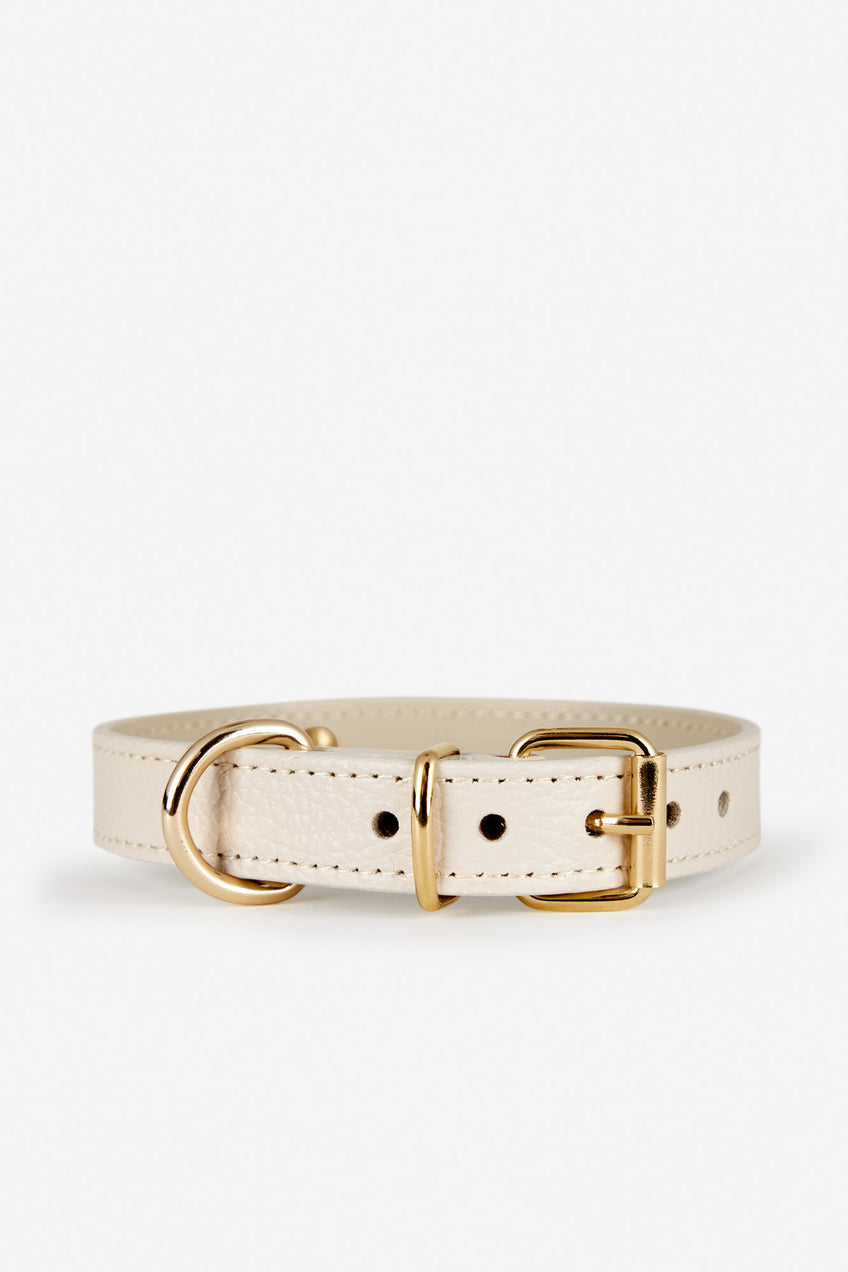
The Juno collar in white is a perfect combination of softness, elegance and timeless style. Crafted from extra-soft Italian leather, lined for added comfort and finished with golden hardware for a touch of sophistication.
Older Poodles require fewer calories to prevent excess weight, as well as a higher intake of fibre. Their joints should be supported with supplements such as glucosamine and chondroitin, which help maintain mobility.
Kibble, homemade food or a BARF diet?
Many vets recommend premium kibble for its nutritional balance and convenience. However, if you choose homemade food or a BARF diet, it is essential to do so with professional guidance. Poor planning can lead to nutritional deficiencies and long-term health issues.
Portions and frequency: neither too much nor too little
The amount and distribution of food matter just as much as its quality. Adjusting both according to age and activity is essential to prevent digestive issues and manage weight.
Puppies
3–4 meals a day to maintain steady energy levels and prevent drops in blood sugar.
Adults
2 meals a day to provide sustained energy and support their activity level.
Seniors
Also 2 meals, but with lighter portions to help prevent excess weight.
Monitoring their weight is vital, as Poodles tend to gain weight easily, which affects their mobility and quality of life.
Nutrition and physical activity: an inseparable combination
A good diet should be accompanied by daily exercise. Walks, playtime and mental stimulation keep your Poodle balanced and happy. Using a suitable dog harness is important to prevent discomfort and allow freedom of movement on every outing.
Real reviews: when good nutrition makes a difference
“Since switching to a more natural kibble, my Poodle’s coat is much shinier and he no longer suffers from digestive issues”
“By combining dry kibble with high-quality wet food, I’ve noticed he eats with more enthusiasm and is more active than ever”
“I now give him functional snacks between meals and not only is he happy, he has also lost weight effortlessly”
Conclusion
Your Poodle’s nutrition is one of the most important decisions for their wellbeing. It’s not just about filling the bowl, but about consciously choosing what you give them every day. By combining good nutrition with activity, care and the right accessories, you’ll have a healthy, happy dog full of life.
Nora ist die Gründerin von Branni Pets. Sie verantwortet die kreative Leitung, entwirft jede Kollektion und koordiniert alle Prozesse, damit jedes Detail von Anfang bis Ende mit Sorgfalt umgesetzt wird.
Shoppe entspannt — du bist geschützt, falls mit deiner Bestellung etwas schiefgeht.
Powered by
Was abgedeckt ist
Kostenlose RücksendungDoch nicht das Richtige? Sende berechtigte Artikel kostenlos zurück.BeschädigtDas Produkt kam beschädigt oder kaputt an.Nicht zugestelltDas Paket ging während des Transports verloren oder ist nie angekommen.Branni Pets Cover ist als optionales Add-on beim Checkout verfügbar und gilt für die Bestellung, der es hinzugefügt wird.
Genieße vollen Schutz bei Produkt- oder Lieferproblemen – kostenloser Rückversand inklusive.